
The Archival Silence: What the Archive Does Not Hold.

Updated: Jun 1
Archives can tell us where someone lived, what work they did, when they appeared in a newspaper, or how an institution recorded their name. But archives do not always tell us who someone was. They rarely capture the sound of a family story, the feeling of belonging in a neighborhood, or the grief carried after a life was misremembered

As a Korean American adoptee, my history was held by the archive before I could hold it myself. Institutions authored my story before I wrote a single word: my adoption record, my identity, my origin story, all constructed and withheld before I could touch them. My archive didn’t silence me. It preceded me.
Trouillot writes that “history is the fruit of power”—it doesn’t just appear. It grows in seasons determined by those who decide what gets recorded, preserved, and remembered. Those choices are rarely neutral. And sometimes, the archive doesn’t just precede a life; it outlasts it—and does its worst damage there.
I think about Vincent Manago Hambright. Born in the Philippines in 1906, he was the son of a Navy man and a Filipina nurse. He came to Cincinnati and became something the city had never seen: a Filipino American boxer who won 73 percent of his fights, held Ohio and New York State championships, and knocked men out in seconds. The archive recorded him in newspaper pages, boxing records, Navy letters, police reports, and court documents. But it recorded him on its own terms, not on the terms of the life he lived.
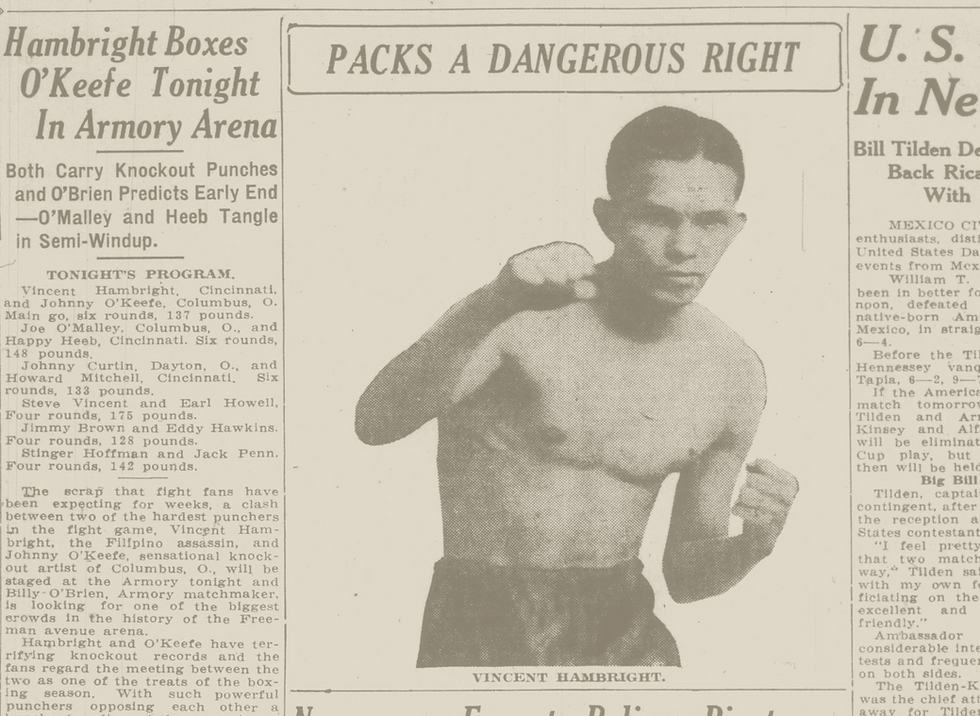
On the night of April 20, 1946, a Navy sailor named Arnold Spivey announced he was “off to see a dead Jap” before hunting Hambright down and shooting him in the back—five shots, the police report said. Nine, according to a Cincinnati newspaper account. The archive revealed what it had always been doing, flattening the story. The paper couldn’t even name him correctly before erasing him. He was Filipino American—a son, a father, a military veteran, a husband. None of it mattered. The institution had already decided what he was.
At trial, the defense did what institutions do: it authored a new version of Vincent M. Hambright—troublemaker, saloon slugger, a man who brought it on himself. Spivey walked free. And Hambright’s history scattered across the archive’s cold surfaces—flattened into city directories, census data points, newspaper clippings, and a death certificate. His archive didn’t silence him. It preceded him, framed him, and ultimately was used to justify killing him.
What survived lived elsewhere. His great-grandsons carried what they called “Bubby stories”—whispered down through generations, held in kitchens and living rooms because the official record had no room for his humanity. The family became the archive. They held what the institution discarded, and they held it the way institutions never do—with love, with grief, with the full weight of knowing who he actually was.
This is the condition of the archive for Asian and Pacific Islander American communities. It gives us traces without intimacy. It names people without knowing them. It records addresses without explaining what those places mean. It marks race without understanding identity. It preserves moments of institutional contact but not the everyday life that moved between those moments. That emptiness is not just a research problem. It is part of the historical experience itself, evidence of how power shaped what could be remembered and what was permitted to disappear.
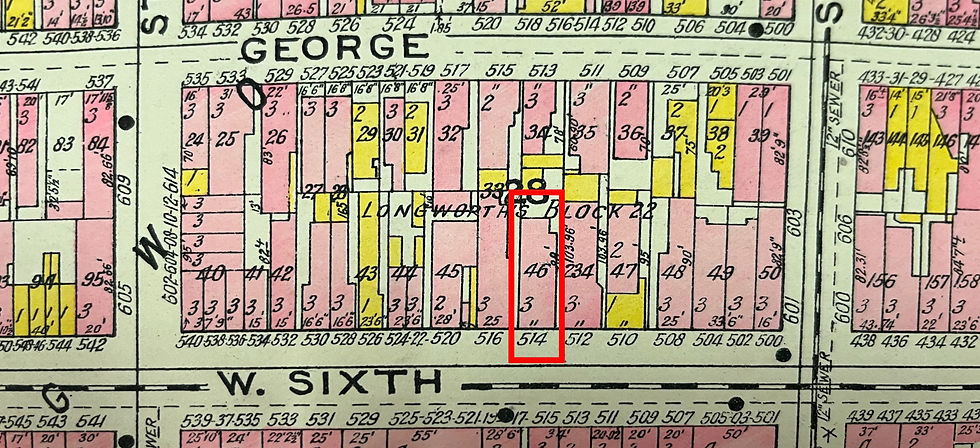
This is the condition the Memory Map was built to interrupt. It uses oral history, family memory, and place to co-create the histories that the official record fragmented, racialized, or never entered at all. It maps Tim Pang's restaurant at 514 West Sixth Street not as a directory entry but as a site of daily life. It treats what the archive cannot say—daily life, family, and community—as the subject of history, not as its absence. The archive authored me before I could speak. It authored Vincent M. Hambright before it erased him. The Memory Map exists because that isn't the end of the story—and we are the ones who get to say so.



Comments