
The Price of Preservation

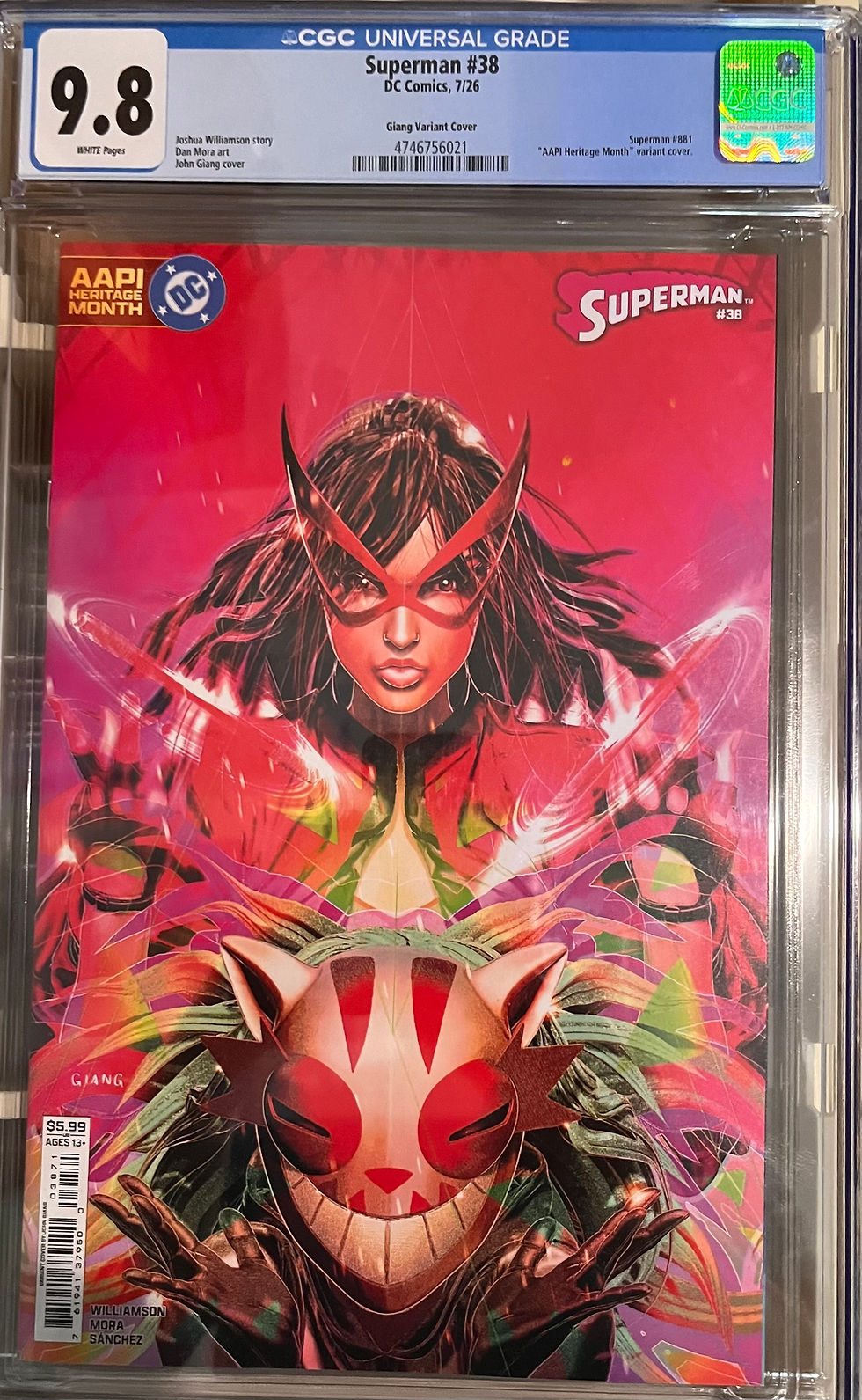
Earlier today, I received a slabbed copy—comic book terminology for semi-permanently encasing a comic—of Superman #38. The main reason I bought the issue is Red Canary, Sienna Song, a Filipina American superhero. The book cost me six bucks and some change. The slabbing cost me another sixty dollars.
The price imbalance—six dollars for the comic book and sixty dollars for the case—has set off a wave of conflicting thoughts in my mind. The price of preservation.
I entered the world of comic book collecting relatively late in my life. It was a moment's chance. I was in my twenties when a friend decided to stop at a local corner store—I was riding shotgun. He had a purpose; mine was accidental. After walking into the store, he beelined to the comic rack and picked up Silver Surfer. He giddily exclaimed, “This is the cover; do you see the foil? That’s going to be money one day.” I knew nothing about comics—very perplexed—so I inquisitively replied, “Why?” He went on to explain that the cover was collectible because of its foil surfboard, making it a special edition. He suggested that comics like this might someday become a good investment.
The possibility of future wealth piqued the interest of a broke twenty-something. With the intention of a financial future, I started browsing the rack more closely until my eye landed on Spawn #1. I knew nothing about Spawn. What held me in the moment was the cover—this masked figure surrounded by a deep, intense red cape swirling across the page. There was no foil or sparkling remarque, but there was something dramatic and almost violent about it. I bought it.
That was my entrance into the comic book world.
At first, collecting was largely speculative. I bought comic books that had a perceived value—sparkling cover, exclusive, first appearance, or some other nuanced characteristic. In my mind, comics were something that might become valuable one day. I bought something, protected it, tucked it away, and hoped that one day someone else would decide it was worth more than I had paid for it. I understood collecting through the language of investment before I ever understood it through the language of identity.
The value faded, and my interest faded along with it. However, around twenty years ago, I reintroduced myself to comics at roughly the same time I was beginning to wrestle more seriously with my own identity. I wandered back into a comic bookstore and came across The Hands of Shang-Chi: Master of Kung Fu. Shang-Chi stood shirtless on the cover; his lean, muscular body presented almost as another weapon—strength and martial arts ability written directly onto him. The image immediately pulled me back to my childhood, when Asian men in popular culture were so often reduced to martial artists, fighters, or weapons.
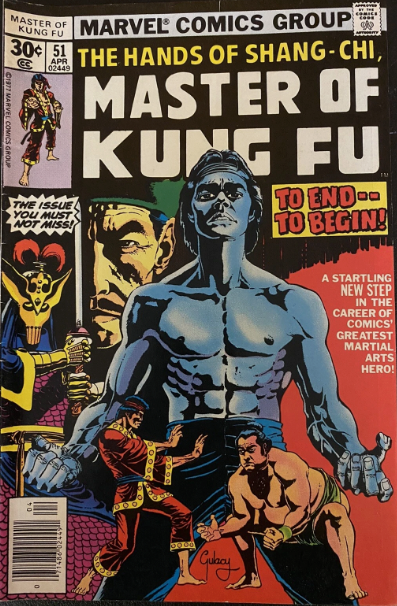
It also brought back memories. I would rather forget people calling me Bruce Lee or Jackie Chan, not in celebration but to diminish me. Their sharp tongues with ridicule and violent comments, “kung fu grip” with laughter—not with joy, but with the kind of laughter meant to make me the joke. People making exaggerated karate-movie sound effects and hand and leg gestures towards me. As a child, I understood that they were making fun of me long before I had the language to explain what they were doing.
Seeing Shang-Chi should have felt like recognition. Instead, recognition was complicated. Here was an Asian superhero, but he was also wrapped in imagery that felt painfully familiar. The hero and the stereotype occupied the same body.
Looking back, I would joyously like to tell you that this was the moment I found myself through comic books.
It wasn’t.
Maybe it was a sliver of identity finding its way in. Or maybe I am reading backward, handing meaning to a moment that did not have much meaning at the time. I had already been collecting for years by then, a hobby that began as an uncertainty—a thing a friend told me might someday pay off. I cannot pinpoint the day identity intertwined with the practice of speculation. I am not sure it ever fully announced itself.
It simply moved in.
It bumped shoulders with the other motive, found an empty corner, and neither ever asked the other to leave.
Somewhere along the way, though, what I chose to collect began to change. Without necessarily deciding that representation would guide my collection, I kept reaching for characters who looked more like the communities and histories I was beginning to search for elsewhere in my life. Today, the heart of my collection consists mostly of BIPOC characters: Black Panther—my favorite—Blade, Totally Awesome Hulk, Silk, Master of Kung Fu, Power Man, Ms. Marvel, Bitter Root, and others.
There are outliers. I collect Daredevil, Superman, Spider-Man, and Gen13. They remind me of my early days of collecting. But increasingly, collecting became another place to find people pushed to the margins of the stories I grew up with.
Which brings me back to Superman #38 and Sienna Song.
I paid six dollars—and some change—for the comic and another sixty to have it sealed inside a rectangle of plastic. If my collecting has become, at least partly, an act of finding characters who deserve to be seen, then the slab complicates that story.
What am I actually paying for?
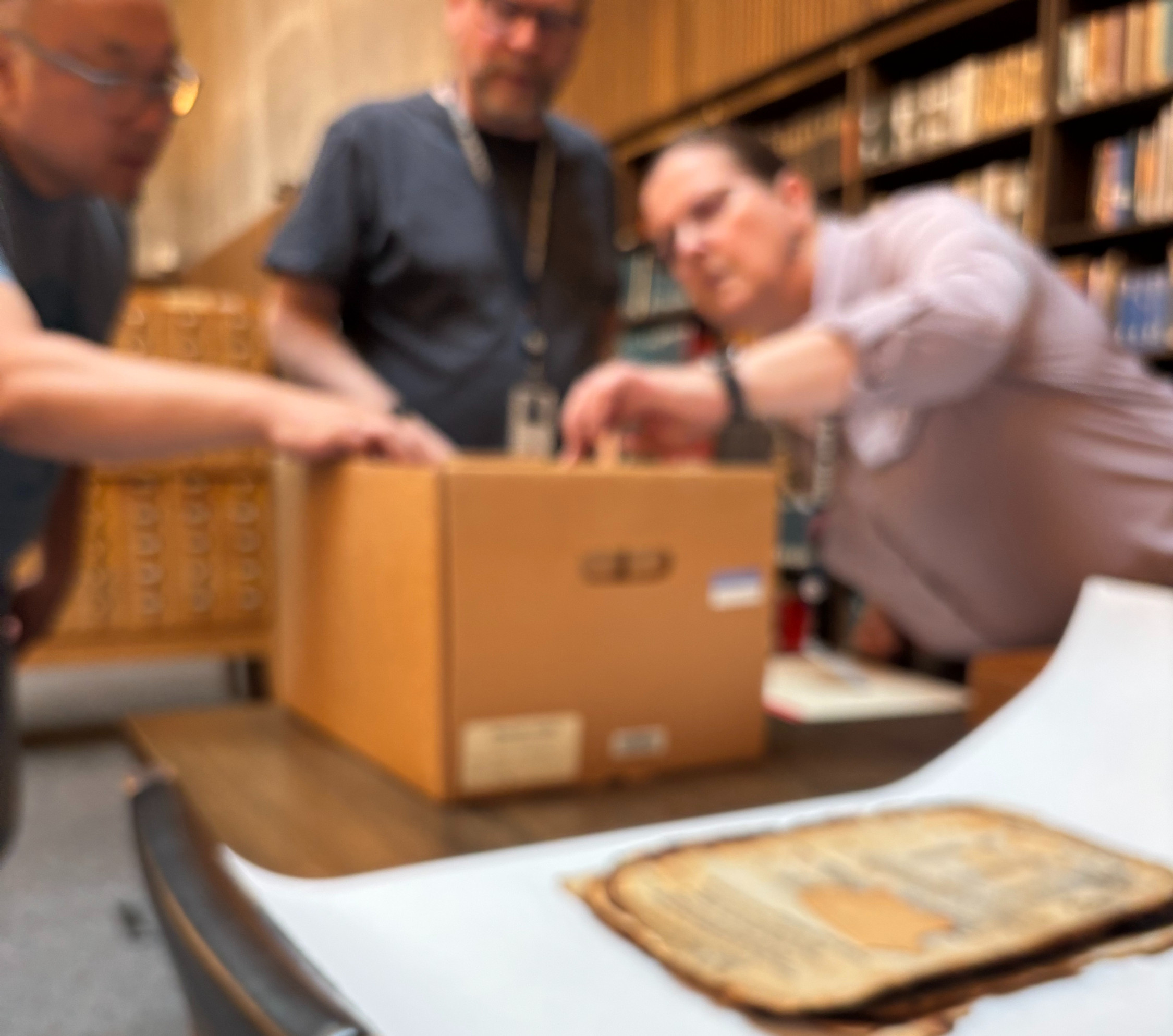
I tell myself it is preservation.
But preservation and validation are not the same thing, and I think I have been allowing one to stand in for the other.
The plastic case does not protect Sienna Song’s story. It protects the object’s condition—its corners, its spine, its pages. What gets certified is the grade, the aesthetics, not the character. Sienna Song sits inside that case exactly as unseen as it was when it sat on my shelf. Nobody buying a slabbed book is necessarily buying recognition for a Filipina American superhero. They are buying a number printed on a label.
And that is the part I must sit with, because it comes uncomfortably close to the thing I am supposedly resisting.
Archives that erased Asian and Pacific Islander American history did not always lack objects. Sometimes the objects survived beautifully.
Rookwood Pottery preserves work decorated by Kataro Shirayamadani. His pottery has been protected, cataloged, collected, displayed, and made museum-worthy. Yet for much of Cincinnati’s historical memory, the object was easier to preserve than the person who made it. Shirayamadani could survive through the thing while remaining strangely absent from the larger story as a person—as an immigrant, an artist, and part of Cincinnati’s history.
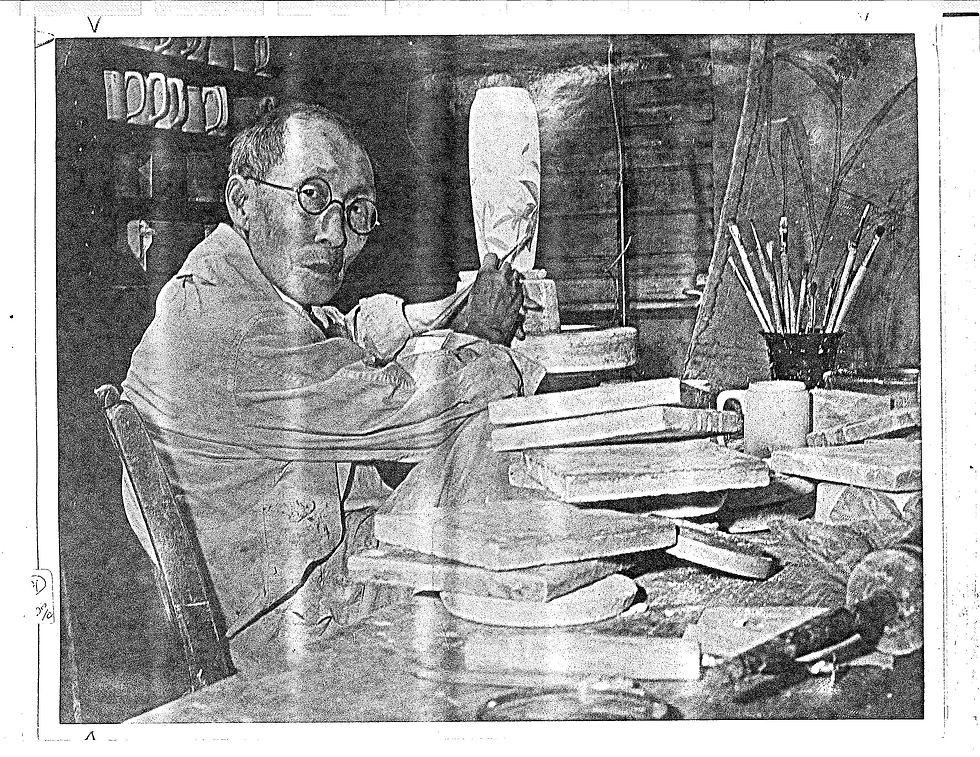
The object survived.
But the archive has made it harder to see the person, their interior life.
I look at the slab and wonder whether I have done something similar.
Have I bought institutional certification for a character instead of demanding that anyone actually see her?
There is an irony in taking a Filipina American superhero whose presence matters to me and sealing her inside a case whose primary purpose is to establish monetary value. I started collecting because someone told me comics might someday be worth something. Decades later, I still pay someone else to tell me what an object is worth.
The difference, I want to believe, is that somewhere along the way I began asking a different question.
Not simply: What is this comic worth?
But: Who is inside it?
That does not make the contradiction disappear. The collector in me still understands scarcity, first appearances, condition, grades, and speculation. The historian in me understands how easily objects can survive while the people attached to them disappear. And the part of me still working through identity understands why finding Sienna Song on a comic book page can feel significant even if most readers barely notice her.
All three of those people were standing at the counter when I bought Superman #38.
I do not have a clean answer about the slab.
Maybe it is still worth something beyond the grade. Is it proof, at minimum, that I thought she mattered enough to protect? Maybe preservation can be the beginning of something, rather than the end. An object can lead us back toward a person if we are willing to ask who is missing from the label.
But protecting an object and seeing the person inside it are not the same act.
And I would be lying if I said I had resolved which one I was actually doing when I paid sixty dollars for that case.


Comments